
SOUND SHOOTING!!Rhythm Shooter
EZDAEMONMusic
4.7133.00 Reviews
- Version
- 1.26
- Installs
- 100.00K
- Age Rating
- Teen
Screenshots
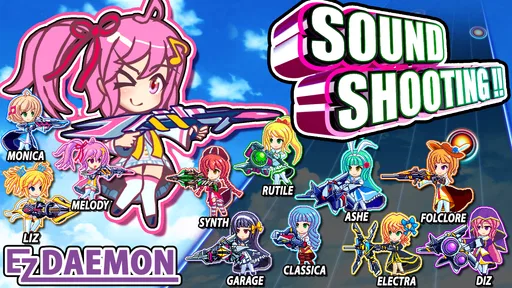
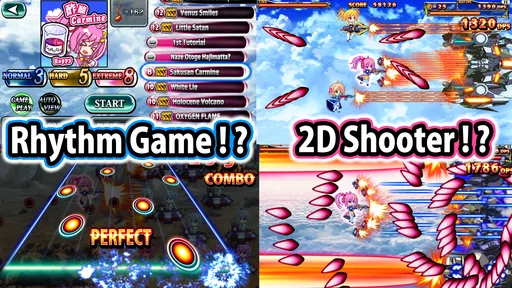


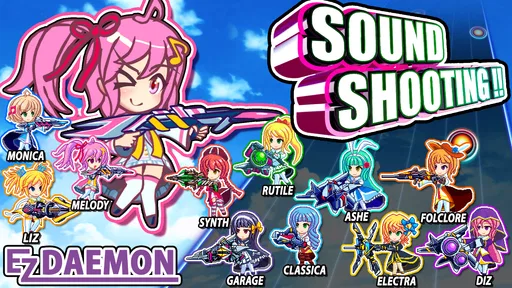
Our Review of SOUND SHOOTING!!Rhythm Shooter
 Analysis by Appyee
I went into SOUND SHOOTING!!Rhythm Shooter expecting a familiar music game with a few shooting effects added for style. That first impression is only partly right. This is a rhythm game built around the pressure of a 2D shooter, so success depends on more than recognizing a beat or reacting to targets. I found myself listening, watching, positioning my attention, and making quick decisions at the same time. Its best moments feel unusually active for a music game, while its rougher moments remind me that combining two demanding genres can also create friction.
The central idea is easy to understand: music drives the action, and the shooting layer gives each sequence a more physical sense of danger. Instead of treating the soundtrack as decoration behind a conventional arcade game, the design asks me to connect sound and movement. That makes it a particularly interesting choice for players who have already grown comfortable with ordinary rhythm games and want something more demanding than tapping notes in a lane.
How the rhythm and shooting sides work together
The game comes from EZDAEMON, a developer clearly aiming at a specialized audience rather than trying to make a broad, casual music app. The combination of rhythm action and 2D shooting gives every session a different kind of focus. In a standard rhythm game, my eyes usually stay fixed on a predictable note path. Here, I have to divide my attention between musical timing and the changing action on screen.
That division is the strongest reason to try it. I do not feel as if I am simply following a song while a visual theme plays around it. The shooting framework makes the beat feel connected to immediate decisions. When the action becomes busy, a missed cue is not just a small break in a score; it can also interrupt the flow of movement and make the whole sequence harder to read.
There is a useful tension between anticipation and reaction. Listening carefully helps me prepare for what is coming, but watching the screen still matters because the visual action can demand a quick response. I found that playing with the sound turned up made the experience more coherent than relying on visuals alone. The music acts as an advance warning system, while the display confirms what I need to do.
This is also why the game is less immediately relaxing than many rhythm titles. A familiar music game can become almost meditative once its note patterns settle into muscle memory. This one keeps more pressure on my attention because the shooter element prevents me from treating the song as a simple sequence of taps. I would describe it as energetic rather than soothing.
The best way to approach a first session
My advice is to begin with short sessions instead of trying to master everything at once. The first few attempts are useful for learning how the musical cues relate to the shooting action, not for chasing a perfect result. I initially wanted to focus only on the apparent rhythm, but that made the screen feel more chaotic. Once I started treating the audio as part of the visual information, the patterns became easier to follow.
Headphones are especially worthwhile here. They make the timing easier to perceive and reduce the temptation to stare at every animation on the display. I also recommend playing when there is little background noise, particularly if the game is being used for practice rather than a quick experiment. The soundtrack is not an optional layer in the experience; it is one of the tools needed to understand what is happening.
A further practical tip is to keep the first attempts deliberately conservative. I get better results when I prioritize staying oriented instead of immediately trying to react to every possible detail. The shooter format can encourage frantic movement, but frantic movement is not always accurate movement. A calm reading of the pattern usually helps more than constant correction.
Why the hybrid format feels rewarding
The most satisfying part of the game is the moment when the two genres stop feeling separate. A good sequence lets me anticipate the rhythm while responding to the action almost automatically. That is a different pleasure from simply earning a high score. I feel as though I have learned a small performance, with the music providing the timing and the shooter mechanics supplying the urgency.
This design also gives the game a stronger replay reason than a short novelty title. I want to return not only because I missed something, but because I can sense that my hands and ears have not yet fully synchronized. The improvement is personal and noticeable: I become less dependent on visual panic and more capable of reading the song as a guide.
That said, the hybrid design is not equally friendly to everyone. Players who enjoy relaxed listening games may find the shooting pressure distracting. Conversely, someone looking for a pure arcade shooter may feel that the musical demands slow down the direct action. The title works best when the player genuinely wants both halves, not when one is merely tolerated.
Where the experience can become demanding
The main weakness is the same feature that makes the game distinctive: divided attention. When several things happen together, the learning curve can feel steeper than expected. A mistake may be difficult to diagnose because I am not always sure whether my timing, visual reading, or movement caused it. That can make improvement satisfying eventually, but frustrating during the early stage.
I also would not choose this as a background game for commuting, waiting rooms, or noisy public spaces. The music needs to be heard clearly, and the visual action deserves concentration. A player who wants something that can be played casually with distractions nearby will probably have a better experience with a simpler rhythm game.
The age classification is Teen, which is worth keeping in mind for families choosing games together. The presentation is built around shooting, even though the main appeal is timing and musical coordination. Parents should consider whether that combination suits the intended player rather than judging it as a music-only title.
The free entry point is helpful because it lets me discover whether the unusual format suits my habits before spending anything. There are in-app purchases priced from $1.99 to $8.49 per item, so I would approach optional spending carefully. I would first decide whether I enjoy the core rhythm-shooter loop and whether I am likely to keep practicing. For a player who only wants a brief novelty, paying for extras would make less sense than simply trying the free experience.
Who will get the most from it
I think the strongest audience is made up of players who already like rhythm games but want more active screen interaction. It should also appeal to people who enjoy 2D shooters and do not mind learning their movement through musical cues. The game has a clear identity because it does not ask me to choose between those interests; it makes the tension between them the point.
It is a good fit for focused solo play. For example, I can imagine using it after work for a short mental reset: one or two attempts are enough to demand my attention without requiring a long commitment. The key is accepting that the session may be stimulating rather than calming. When I want to switch off completely, I would choose a less demanding music game instead.
It is also suitable for players who enjoy gradual mastery. Someone who likes replaying a stage to improve timing, reduce mistakes, and understand patterns will find more depth here than someone who judges a game after one easy run. The satisfaction comes from becoming more coordinated, not merely from seeing the concept once.
I would skip it if my priority is a broad library of conventional music-game modes, an uncomplicated tap-to-the-beat experience, or a shooter that can be played with minimal attention to sound. The unusual design is not automatically better than those alternatives. It is simply more specific, and that specificity will either be the reason to install it or the reason to move on.
Device expectations and long-term appeal
The game supports Android devices from version 4.4 onward, which makes its stated compatibility relatively approachable for older hardware. That does not guarantee that every device will feel equally comfortable, though. Rhythm play is sensitive to timing and responsiveness, so I would pay attention to how accurately my own phone registers input before blaming myself for inconsistent results.
The current version is 1.26, and the game has been available since April 12, 2019. Those details place it as an established title rather than a brand-new experiment. I appreciate that distinction because it changes how I view the unusual concept: this is not merely a launch gimmick, but a game with a defined identity that has remained available for players interested in its particular style.
Its audience is not enormous by the standards of the biggest mobile releases, yet it has passed 100K installs and holds a 4.7 average from around 3K ratings. I read that as a sign of strong appeal among the people it reaches, rather than proof that everyone will enjoy it. The number of written reviews is around 133, so I would still rely on my own first sessions to decide whether the control balance works for me.
For storage and everyday use, I would treat it like a focused game rather than a passive music player. The best time to play is when I can give the screen and audio a few uninterrupted minutes. That small change in routine makes a noticeable difference because the game rewards concentration more than casual checking.
How it compares with familiar alternatives
Compared with a traditional lane-based rhythm game, this title feels less orderly and more reactive. Conventional alternatives are often easier to understand at a glance because the note path tells me exactly where to look. Here, the 2D shooting structure adds movement and urgency, so the mental workload is higher. The trade-off is that successful play feels more physical and less like following a visual checklist.
Compared with a standard bullet-focused arcade shooter, it has a stronger musical identity and a less straightforward action loop. A pure shooter may be preferable when I want immediate movement, direct targeting, and minimal dependence on the soundtrack. This game is better when I want the song to influence how I read and respond to the action.
It also differs from casual music apps that are mainly designed for quick, low-pressure entertainment. Those games can be easier to pick up while multitasking. SOUND SHOOTING!!Rhythm Shooter asks for a clearer commitment: listen properly, watch carefully, and accept that mistakes are part of learning the combined system.
The comparison that matters most is not whether it replaces every other music game. It does not. Its value comes from offering a narrower but more distinctive experience. If I want variety through a new interaction between audio and shooting, it stands apart. If I simply want the smoothest or most accessible rhythm routine, a conventional alternative is likely the wiser choice.
My verdict after spending time with it
I came away impressed by the confidence of the concept. The game does not hide its identity behind a generic music-game structure; it makes rhythm and 2D shooting share the same space. That produces moments of real satisfaction when my hearing, vision, and movement line up. It also produces confusion when they do not, so the experience demands patience.
The free price makes the decision easier. I would install it if I enjoy rhythm games, arcade shooters, or both, and I would give it several focused attempts before deciding. I would not judge it fairly during a noisy, distracted session. The early learning period is important because the game’s appeal appears after the two systems begin to feel connected.
My final recommendation is specific: try it if you want a challenging music game with an arcade edge and you like improving through repetition. Skip it if you prefer calm, simple beat matching or a pure shooter without musical pressure. Its biggest strength is also its clearest warning: the unusual combination creates a memorable game, but it asks you to learn two kinds of timing at the same time.
For me, that trade-off is worthwhile. EZDAEMON has created a specialized rhythm title that feels more active than the usual alternatives and more musically structured than a typical shooter. It will not be the right choice for every mobile player, but for the audience it targets, it offers a focused challenge with enough personality to deserve a place on the phone.
Verdict
Strengths of SOUND SHOOTING!!Rhythm Shooter
- Combines rhythm gameplay with shooting for a distinctive arcade experience.
- Short stages make it easy to enjoy during quick gaming sessions.
- Music timing directly influences combat, keeping gameplay engaging.
- Simple controls are accessible for beginners while rewarding accuracy.
- Fast-paced visuals and effects give battles an energetic atmosphere.
Limitations of SOUND SHOOTING!!Rhythm Shooter
- The action can become repetitive after extended play sessions.
- Higher difficulty may feel punishing when timing mistakes chain together.
- Some songs or content may require progression before becoming available.
- Busy effects can make incoming attacks harder to read on small screens.
- The game may appeal mainly to players who enjoy rhythm-based challenges.
Similar Picks in This Category
View All
Tiles Hop Music & Ball Game
AMANOTES PTE. LTD.4.3

Magic Tiles 3™ - Piano Game
AMANOTES PTE. LTD.4.6

Real Piano
Bilkon3.7

Piano Game: Classic Music Song
Dream Tiles Piano Game Studio4.0

Smash Colors: Music Ball Rush
BADSNOWBALL HONGKONG LIMITED4.2

Piano Music Go-EDM Piano Games
Joy Journey Music Games4.5
Frequently Asked Questions
What is SOUND SHOOTING!!Rhythm Shooter?
SOUND SHOOTING!!Rhythm Shooter is a music-based action game that combines rhythm gameplay with shooting mechanics. As songs play, you must follow the beat, aim at incoming targets, and tap or shoot at the correct moments. The experience is designed to test both musical timing and reaction speed, making each track feel like a fast arcade challenge rather than a traditional rhythm game.
How do you play SOUND SHOOTING!!Rhythm Shooter?
Gameplay generally involves listening to the selected song while targets, notes, or enemies appear in time with its rhythm. You need to touch the screen at the right moment to shoot or destroy them, while avoiding mistakes and keeping your combo alive. Accuracy is important because well-timed actions usually produce higher scores, better rankings, and a more satisfying performance.
Is SOUND SHOOTING!!Rhythm Shooter suitable for beginners?
Yes, the game can be approachable for beginners, especially if they start with easier songs or lower difficulty settings. However, the speed and number of targets can increase quickly, so new players may need a little practice before achieving consistent combos. Players who enjoy rhythm games, arcade shooters, or reaction-based challenges should understand the controls fairly quickly.
Does SOUND SHOOTING!!Rhythm Shooter require an internet connection?
Internet requirements may depend on the version and the features you want to use. Basic gameplay could be available in some offline situations, but online access may be necessary for downloading songs, receiving updates, viewing rankings, synchronizing progress, or using other connected functions. It is best to check the app-store listing and test the game after installation before relying on it offline.
Is SOUND SHOOTING!!Rhythm Shooter free to download?
The game may be free to install, but availability of optional purchases, advertisements, extra songs, or other in-game content can vary by platform and region. Before downloading, review the Google Play or App Store listing for the current pricing information and purchase details. If the game includes timed events or unlockable content, players should also check whether progression can be earned through normal play.
Play our best games!


